

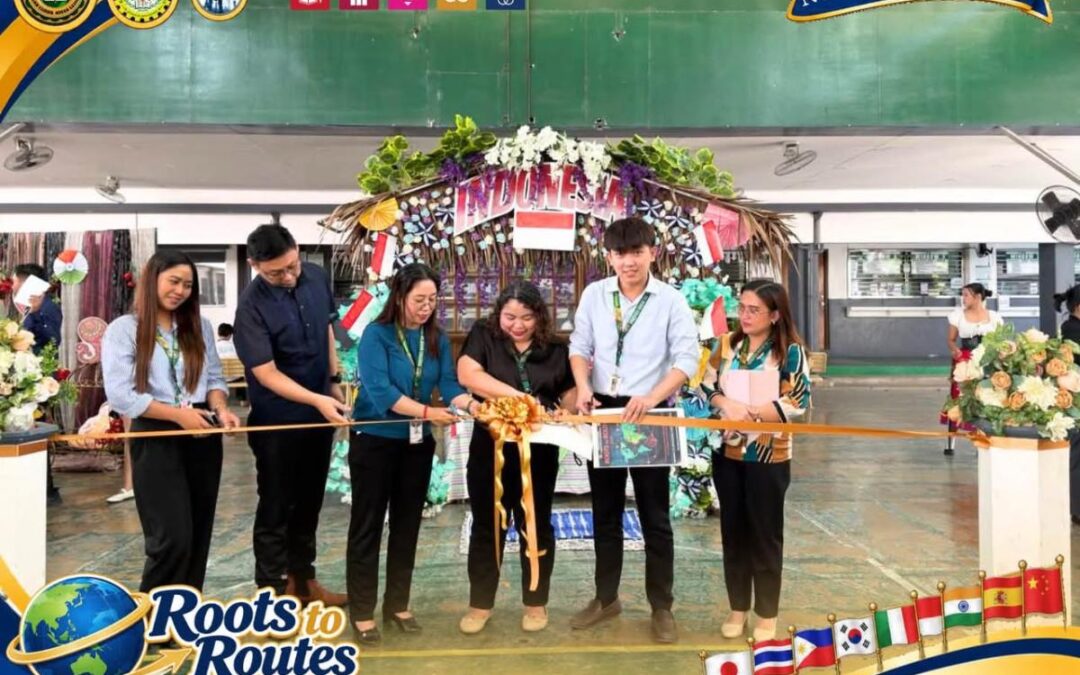
First-year Bachelor of Science in Business Administration (BSBA) students built country booths for Roots to Routes 2026. Through these booths, they brought nine countries to General de Jesus College (GJC). The post that shared the activity also calls these students the Marketistas. Their booths presented the identity, traditions, products and unique characteristics of each country.
Nine Nations in the Country Booths
The booths represented Japan, Thailand, the Philippines, India, South Korea, Spain, China, Italy and Indonesia. Together, they spanned East Asia, Southeast Asia, South Asia and Europe.
Each booth offered a look at a country’s heritage. At the same time, it showed the students’ creativity as entrepreneurs. It also celebrated the diversity that makes international trade and business interesting. Behind every display, the students also relied on teamwork, research and innovation to turn classroom learning into a global experience.
Learning International Trade Through Culture
Culture shapes what people buy and how companies sell abroad. Therefore, business students gain from studying the traditions of other countries as well as their markets. The BSBA Department held Roots to Routes 2026, its culminating activity, on November 13, 2026, at the GJC Gymnasium.
Its theme, “Tracing History, Connecting Global Markets, and Building a Sustainable Future,” tied heritage to trade. The BSBA program belongs to the GJC College of Business Administration, which offers majors in finance, human resources and marketing. For first-year students, the country booths were an early chance to put their classroom lessons to use.
Supporting the GJC HEART Framework and the SDGs
Through the activity, the students embraced the GJC HEART Framework. They also showed quality and meaningful learning under the college’s Educational Organization Management System (EOMS). In addition, the event celebrated cultural diversity in support of the United Nations Sustainable Development Goals.
The post described Roots to Routes 2026 as a passport to culture, commerce and creativity. With nine country booths in one venue, the students brought several regions of the world into a single campus.